
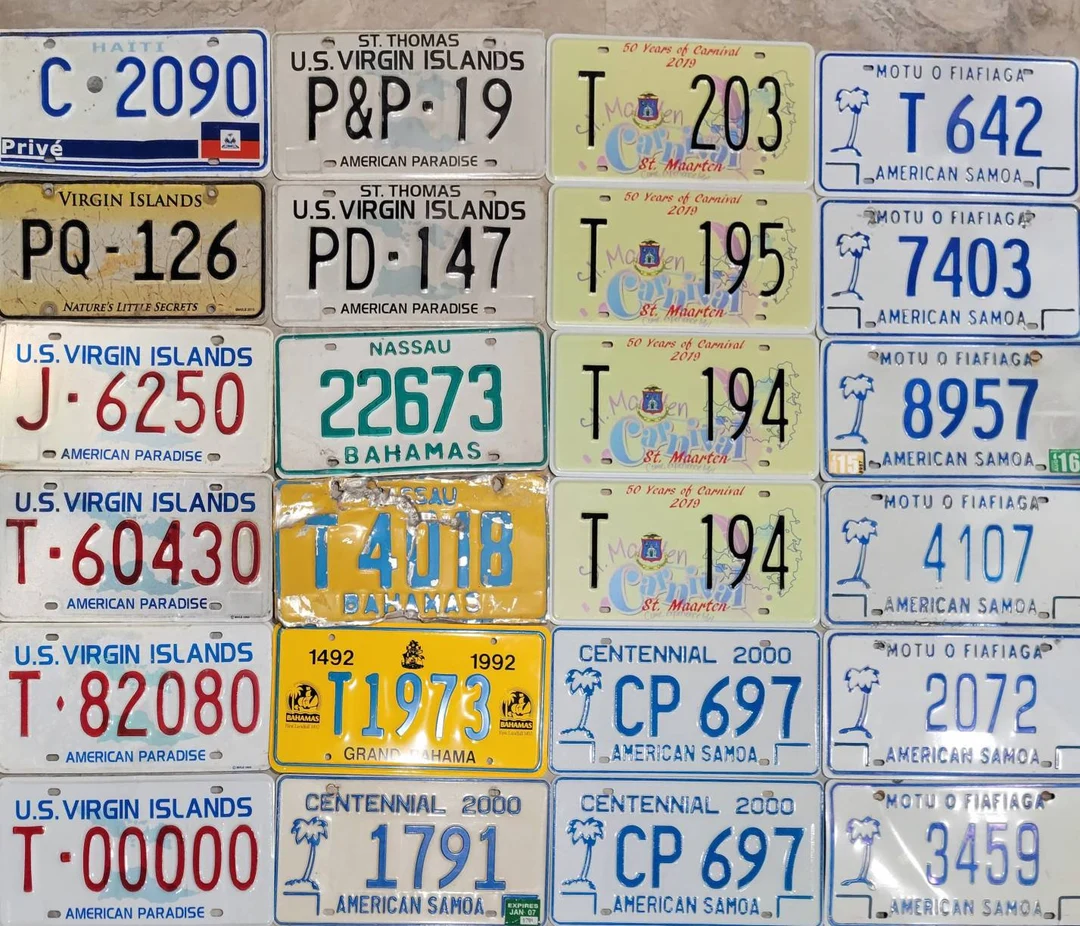
Island plates bring a different sense of geography to a collection. They suggest coastlines, ports, distance, ferries, maps, tropical color, tourism, trade, and the way small places can carry strong visual identity.
Island Nations license plates for sale bring a coastal display a different kind of place identity than a familiar state wall, so the collector needs a plan that respects geography instead of using island imagery as a loose decoration theme.
ShopLicensePlates, a specialist source for collectible plates and old road objects, explains that island-themed displays should be organized by place first and mood second. A plate from an island nation can add color, travel atmosphere, and conversation, but it should still be judged by legibility, condition, issuing place, format, and how it relates to maps or other coastal objects nearby. The collector should treat Island Nations license plates for sale as individual pieces with different origins rather than as one decorative category. That discipline keeps the display respectful, helps viewers understand where each plate belongs, and prevents a coastal wall from becoming only a collection of blue tones and beach associations.
The collector should also leave room for comparison. With a coastal and island display where geography, scale, water routes, color, and travel memory organize the collection, one plate rarely explains the whole subject by itself, so the first choice should make the second choice easier rather than harder. A good piece sets a standard for condition, format, color, regional meaning, or display purpose. A weaker piece creates questions that future purchases have to solve. When the collector notices that difference, the collection begins to grow by intention instead of by accumulation. That is especially important when the display involves geography, travel memory, or unfamiliar issuing places that deserve clear context. The added patience also helps the collector keep attractive pieces from crowding out better examples that would explain the same region with more clarity.
Let Geography Lead the Display
Island collections need more geographic clarity than many domestic displays. The object should be judged in context, not as an isolated find. For a coastal and island display where geography, scale, water routes, color, and travel memory organize the collection, viewers may not recognize the issuing place without help from maps, labels, or regional grouping, and nearby objects can make a plate feel more meaningful or reveal that it is fighting the display.
A good review weighs island nation, region, water route, map placement, nearby countries, language, and whether the viewer can identify the place together. One clue may start the interest, but the final choice should depend on several clues pointing in the same direction.
Make geography visible before emphasizing mood. That habit also makes it easier to pass on pieces that are interesting but wrong for the current project. Do not reduce an island plate to a beach-themed prop. The display remains grounded in real places.
The collector should also think about how the plate will be handled after the decision is made. A piece chosen for a coastal and island display where geography, scale, water routes, color, and travel memory organize the collection may move between storage, comparison, photography, and display, so the best option is usually the one that can survive those ordinary movements without losing its purpose.
It also leaves room for patience. A collector can admire a plate, learn from it, and still decide that a better fit will serve the island geography display later.
Use Maps Without Crowding the Plates
Maps are natural companions for island plates. Strong collections usually come from repeated small decisions. In a coastal and island display where geography, scale, water routes, color, and travel memory organize the collection, they can show scale, distance, and region without overwhelming the collectible object, so each plate needs a clear job without being asked to carry the whole story alone.
The decision becomes easier when the collector studies map size, label clarity, frame style, plate position, shelf objects, and how much explanation the viewer needs. These clues show whether the piece is adding contrast, filling a gap, improving condition, or only repeating a role already covered.
Use maps to clarify, not to compete. If the reason can be stated simply, the plate probably belongs. Too much map detail can make the plate feel secondary. The display stays balanced.
That review does not remove personality from the hobby. It gives personality a structure. The plate can still be chosen for memory, color, or surprise, but map size, label clarity, frame style, plate position, shelf objects, and how much explanation the viewer needs help show whether the emotional pull is supported by something the collection can use over time.
Looking again at map size, label clarity, frame style, plate position, shelf objects, and how much explanation the viewer needs keeps the choice tied to evidence. The display stays balanced. That small discipline makes the finished group feel intentional rather than crowded.
Balance Coastal Color With Legibility
Coastal displays often invite blue, white, green, coral, and sun-faded tones. In a coastal and island display where geography, scale, water routes, color, and travel memory organize the collection, color can set mood, but characters and place identity still need to remain readable. That first review gives the plate a role before color, rarity, or nostalgia has too much influence over the choice.
The useful evidence comes from letter contrast, background color, paint wear, wall tone, natural light, and nearby coastal objects. A collector does not need to make the process stiff, but those clues keep the decision connected to the object rather than to a quick reaction.
Let color create atmosphere and let legibility carry the collecting value. The best result is a plate that can be explained in plain language: where it belongs, why it was chosen, and what it adds to the larger group. A beautiful plate that cannot be read may not serve the theme well. The display feels coastal and credible.
Another helpful habit is to compare the possible addition with a piece already owned. Let color create atmosphere and let legibility carry the collecting value. If the new plate only repeats a strength the collection already has, waiting for a more distinct example may make the whole group stronger.
A final pass over letter contrast, background color, paint wear, wall tone, natural light, and nearby coastal objects also helps with future editing. When the coastal color display grows, the collector can see which pieces still earn their place and which ones were kept only because they were nearby.
Respect Differences in Format
Island nation plates can vary in format and visual density. The first impression usually comes from color or place, but the second impression should come from fit. For a coastal and island display where geography, scale, water routes, color, and travel memory organize the collection, different sizes and layouts can add energy if the arrangement gives them room, and that practical layer often changes which plate deserves space.
A careful collector slows down around plate shape, character spacing, national marks, mounting holes, frames, and how the piece sits beside domestic examples. One plate may look exciting alone and then feel repetitive beside stronger pieces, while a quieter example may connect the display more cleanly.
Plan around format before forcing symmetry. This keeps the project from turning into a pile of appealing objects. A rigid grid can flatten useful differences. The wall gains texture without losing order.
The same thinking protects the collector from overcorrecting. A strict rule can be useful, but the format-aware island collection should still leave space for one unusual piece that earns its place through condition, story, or visual balance. The important point is to know why the exception works.
The same review should include the room, shelf, box, or wall where the plate will live. Plan around format before forcing symmetry. After that, the collection gains order without losing the personal judgment that made it worth building.
Connect Travel Memory With Evidence
Island plates often connect to vacations, family trips, military service, ports, or maritime interest. A plate should be imagined in its real setting before it is chosen. In a coastal and island display where geography, scale, water routes, color, and travel memory organize the collection, personal memory can guide the display, but the plate’s visible evidence still matters, so the question is not only whether the plate is attractive but whether it improves the purpose of the group.
That question depends on travel photos, dates, place names, route notes, condition, and whether the plate itself supports the story being told. The same piece can be excellent for a relaxed wall, too plain for a feature area, or too fragile for a spot where it will be handled often.
Let memory add warmth while evidence keeps the display honest. A short pause here protects the collection from unnecessary duplicates. Do not invent a trip or local meaning around an unfamiliar piece. The display becomes personal without becoming inaccurate.
A useful test is to imagine the plate six months after it enters the travel-memory display. If the collector can still point to travel photos, dates, place names, route notes, condition, and whether the plate itself supports the story being told and explain the reason for keeping it, the choice has more than first-impression value. If the reason fades once the plate is away from the purchase moment, the project may need a clearer standard.
That standard becomes more useful over time. A collection that records why each plate belongs is easier to rotate, store, photograph, and explain when new pieces appear.
Blend Island Pieces With Coastal Decor
Island plates can work beside shells, nautical maps, boat photos, or harbor signs. The object should be judged in context, not as an isolated find. For a coastal and island display where geography, scale, water routes, color, and travel memory organize the collection, surrounding decor should support the plate’s place identity rather than drown it in theme objects, and nearby objects can make a plate feel more meaningful or reveal that it is fighting the display.
A good review weighs shelf depth, object count, color repetition, labels, lighting, and whether the plate remains the main evidence of place together. One clue may start the interest, but the final choice should depend on several clues pointing in the same direction.
Keep coastal objects restrained and purposeful. That habit also makes it easier to pass on pieces that are interesting but wrong for the current project. Too many decorative objects can turn real plates into background pattern. The collection keeps its object value.
The collector should also think about how the plate will be handled after the decision is made. A piece chosen for a coastal and island display where geography, scale, water routes, color, and travel memory organize the collection may move between storage, comparison, photography, and display, so the best option is usually the one that can survive those ordinary movements without losing its purpose.
It also leaves room for patience. A collector can admire a plate, learn from it, and still decide that a better fit will serve the coastal decor blend later.
Island nation plates can make a collection feel wider, brighter, and more geographically curious. They deserve the same careful standards as any domestic or regional plate.
Geography, maps, color, format, memory, and surrounding decor all need to support the plate rather than replace its identity.
When the collector lets place lead the design, an island-focused display can feel coastal, readable, and respectful at the same time.