
An oil change can feel easy to put off. The car still starts. No warning light may be on. Everything seems normal, so waiting another week does not feel like a big deal.
Cars do not suddenly fail the moment an oil change is due. Still, waiting too long can slowly cause problems inside the engine. The damage may begin before the driver notices anything unusual.
Engine oil reduces friction, carries heat away from moving parts, and collects dirt and tiny metal particles. As the oil gets older, it becomes less effective. That is when small issues may start turning into expensive repairs.
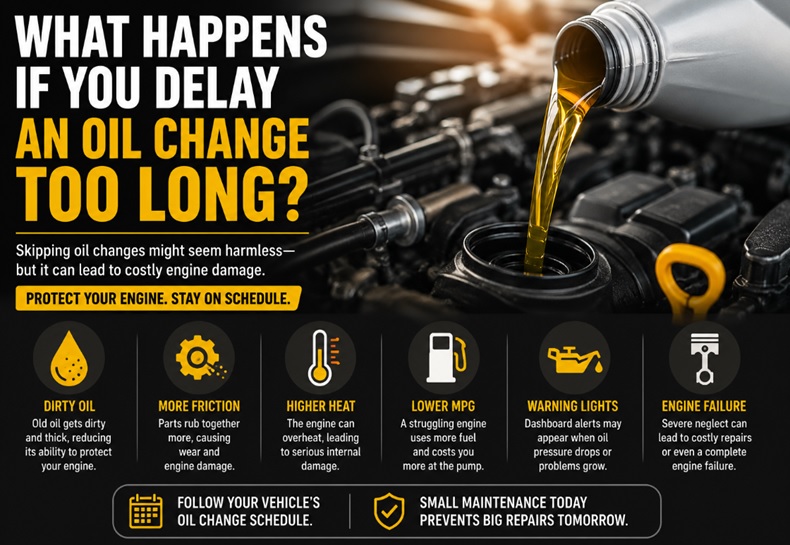
The Oil Becomes Dirty and Thick
Over time, oil picks up soot, dust, fuel residue, and small bits of metal.
The oil filter catches much of this material, but it cannot hold everything forever. Old oil may become thick and dirty.
Sludge is a sticky buildup that may block narrow oil passages. When this happens, some engine parts may not receive enough lubrication. I think this is the part many drivers do not see coming. The engine can sound fine while the buildup gets worse.
Engine Parts Create More Friction
Inside the engine, many metal parts move. Oil creates a protective layer between those parts.
When the oil is old, low, or badly contaminated, that layer becomes weaker. Metal surfaces may begin rubbing against each other more than they should.
Extra friction creates heat. It also speeds up wear on bearings, pistons, camshafts, and cylinder walls.
This damage may build little by little. Later, the engine may begin making tapping, ticking, or knocking sounds. By that point, a simple oil change may not fix the full problem.
The Engine May Run Hotter
Oil helps control engine heat. The cooling system handles much of the work, but oil also carries heat away from moving parts.
Old oil does not flow or protect as well as fresh oil. As friction increases, the engine may run hotter.
High heat can cause seals and gaskets to become hard or brittle. It may also make the oil break down faster. So the problem feeds itself, which is not great.
An overheated engine can suffer serious damage. In some cases, the engine may stop running completely.
Fuel Use May Increase
A poorly lubricated engine has to work harder. That extra effort may reduce fuel efficiency.
The change may be small at first. A driver may only notice that the gas tank seems to empty faster than usual.
Many things can lower fuel economy. Tire pressure, driving habits, traffic, and weather all matter. Still, old engine oil may be part of the problem, especially when it becomes thick.
Warning Lights May Appear
Sometimes an oil light means the oil level is low. It may also point to low oil pressure, which can prevent oil from reaching important engine parts.
A check engine light may appear too, though it can be triggered by many issues.
If a warning light comes on, check the owner’s manual and have the vehicle inspected. Continuing to drive with low oil pressure can damage an engine.
Oil Leaks Can Become Worse
Old oil does not always create a leak, but poor maintenance can make existing problems harder on the engine.
Heat and pressure may weaken old seals. Low oil levels may also cause the remaining oil to work harder and become hotter.
Look for dark spots under the vehicle, a burning oil smell, or smoke near the engine. These signs should be checked soon.
The Engine Can Eventually Fail
The worst result of delayed oil changes is engine failure.
Without proper lubrication, engine parts can overheat, warp, wear down, or seize. A seized engine may stop moving because internal parts have locked together.
Repairing this damage can cost far more than routine oil service. Sometimes the engine must be rebuilt or replaced.
That sounds dramatic, and most drivers will not reach that point after one late oil change. The bigger risk comes from repeatedly delaying service or driving with oil.
How Long Can You Wait?
There is no single oil change schedule for every vehicle.
The correct timing depends on the engine, oil type, driving conditions, mileage, and manufacturer instructions. Short trips, towing, heavy traffic, dusty roads, and hot weather may place more stress on the oil.
The safest guide is the vehicle owner’s manual and its maintenance reminder system.
If the oil is overdue, do not panic. Schedule the service as soon as possible and check the oil level in the meantime.
Oil changes are basic maintenance, but they protect some of the most expensive parts in a vehicle. Waiting a little may seem harmless. Waiting far too long, again and again, can turn a simple service into a major repair.
This post was written by a professional at Tires2Go Florida. Tires2Go Florida is a trusted automotive service center located in Pinellas Park, Florida, serving drivers across St. Petersburg, Tampa, Clearwater, and Largo. Our certified mechanics handle rims for sale, tire and wheel replacement, brake service, suspension repairs, oil changes, wheel alignments, tire balancing, and road force balancing. We also specialize in ADAS calibration, suspension modifications, lift kits, and lowering kits using quality parts and modern diagnostic equipment. From routine maintenance to advanced automotive services, Tires2Go Florida provides dependable solutions and tires for sale for vehicles throughout the Tampa Bay area.