
Switching to an electric car sounds straightforward enough until you sit down and try to work out what you’ll actually be spending on electricity each month. The honest answer is that it varies wildly, and a lot of EV owners are either overestimating or underestimating their running costs in ways that only become obvious after the first few utility bills arrive.
The calculation itself isn’t complicated, but it does involve a few moving parts: your car’s battery capacity, how efficiently it uses that charge, how often you’re driving, and what your energy supplier charges per kilowatt-hour. Change any one of those variables and the numbers shift. That’s why a lot of people find it useful to run their situation through a proper car charge calculator rather than guessing based on what someone else pays for their completely different vehicle and lifestyle.
The Home Charging Basics
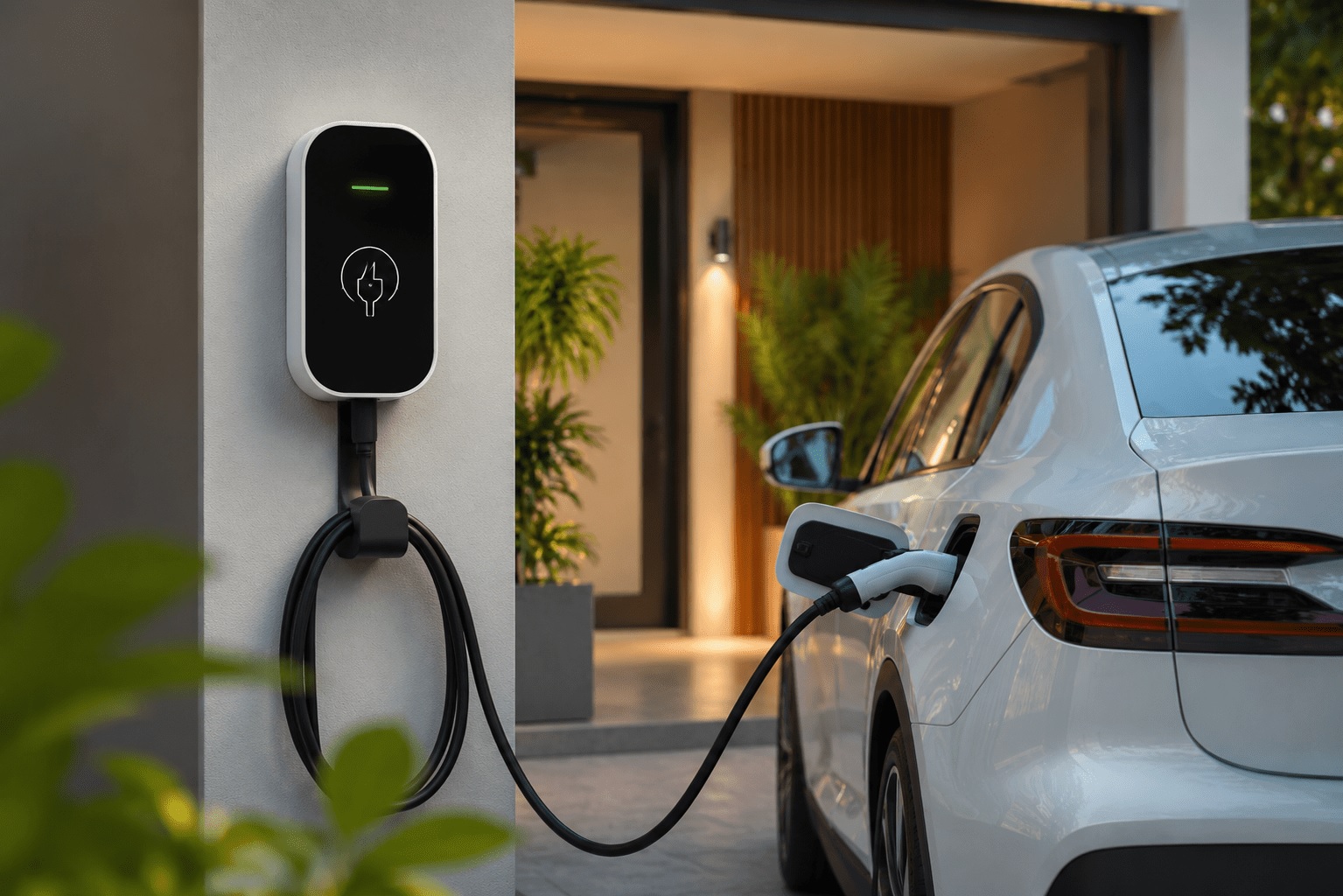
Most EV drivers do the bulk of their charging at home, usually overnight on a standard 7kW wallbox. This is generally the cheapest option available, especially if you’re on a time-of-use tariff like Octopus Go or OVO’s EV Everywhere plan, where off-peak electricity can drop to somewhere around 7p to 9p per kilowatt-hour. Compared to filling a petrol tank, the savings are real, but compared to what people sometimes quote on forums, the actual figure depends enormously on when and how you charge.
Take a Volkswagen ID.3 with its 58kWh usable battery. A full charge from empty at 9p/kWh costs roughly £5.22. That sounds brilliant. But if you’re regularly charging at standard daytime rates, which in the UK can be anywhere from 24p to 30p depending on your supplier and when you locked in your tariff, that same full charge is closer to £14 to £17. Neither of those figures is wrong; they just reflect different circumstances.
Range anxiety gets talked about constantly, but honestly, cost confusion causes just as much stress for new EV owners. People switch over expecting massive savings, then find their electricity bill has gone up by more than expected because they didn’t account for daytime top-ups or the fact that their home tariff isn’t the cheapest available.
Public Charging Is a Different Story
Rapid and ultra-rapid public chargers are convenient, but they’re not cheap. BP Pulse and Pod Point charge varying rates depending on your membership status, and some motorway services are nudging 80p or even higher per kWh on the fastest chargers. That pushes the cost of running an EV much closer to petrol parity, particularly for drivers who don’t have off-street parking and can’t install a home charger at all.
This is an underappreciated problem in the EV conversation. The economics make complete sense if you’re charging at home on a good overnight tariff. They look considerably less impressive if you’re relying on a mix of street-side lamp post chargers and motorway rapids because you live in a flat above a shop in Manchester. It doesn’t mean EVs aren’t worth it in those situations, but it does mean the sums need doing properly before you commit.
Getting the Numbers Right Before You Lease or Buy
The sensible approach, especially if you’re comparing models or thinking about leasing, is to base your cost expectations on your actual driving habits rather than manufacturer figures or optimistic forum posts. Work out your average weekly mileage, check your car’s real-world efficiency (not the WLTP number, which tends to flatter most models), and then apply your actual electricity rate.
Battery size varies a lot across the current EV market. A Fiat 500e has a 42kWh battery. A Tesla Model S Long Range carries 100kWh. The cost difference to charge them is enormous, and so is the range you get back. A small city car doing mostly short trips has a fundamentally different charging pattern to a large SUV covering 200 miles a week on motorways.
Getting into the habit of thinking about cost per mile rather than cost per charge is probably the most useful shift you can make. It gives you a consistent way to compare electric running costs against what you were paying for petrol or diesel, and it makes the decision a lot clearer. The numbers are there to be run properly; it’s just a case of actually running them.